
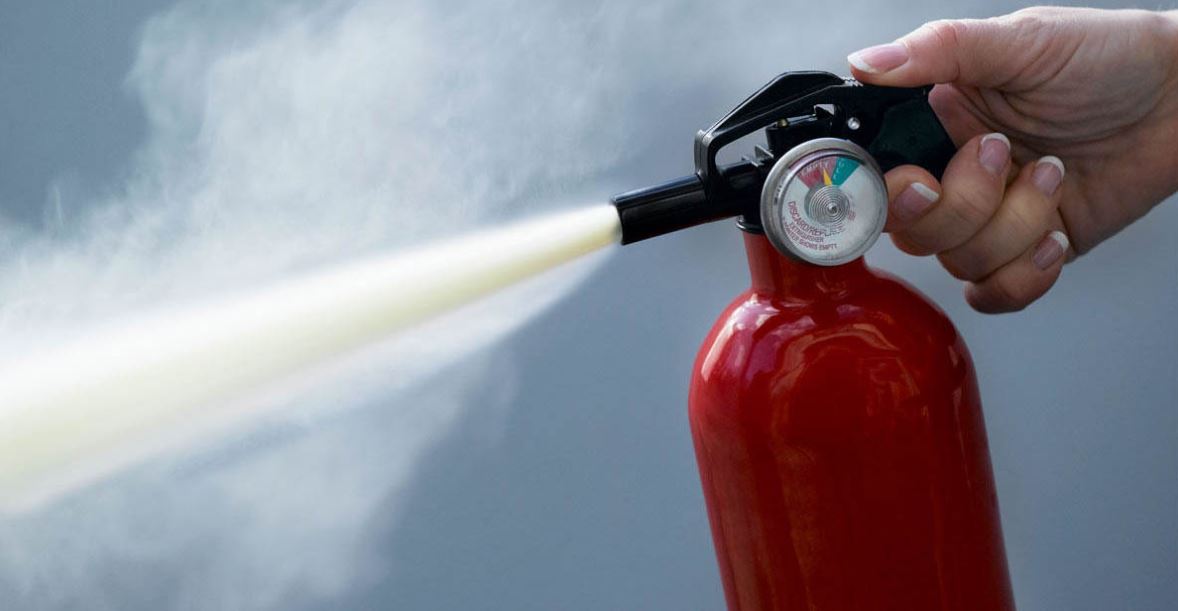
Which Extinguisher to Choose Depending on the Type of Fire?
A fire outbreak can turn into an inferno within seconds. Knowing how to choose and use the correct extinguisher will prevent a violent fire that destroys human activities or nature.
Since fire causes can be of different types, a classification has been established to identify the measures to be adopted quickly.
- Class A fires– are produced by solid materials or dry and braising fires (wood, fabrics, paper, plastic, cardboard, etc.). Burning can be slow without a flame or fast with bright flames.
- Class B fires– They are also referred to as “fat fires,” which bur without making embers. The flames come from flammable liquids or liquefied solids such as hydrocarbons, solvents, gasoline, alcohols, greases, oils, paints, etc.
- Class C fires– designates flammable gas fires such as butane, acetylene, natural gas, and manufactured gases.
- Class D fires– Particularly dangerous and most often reserved for specialists, class D fires represent metal fires, which in contact with water emit hydrogen resulting in a high risk of explosion.
- Class F fires– Incorporates fires linked to cooking auxiliaries on cooking appliances (oil and grease).
How to Choose the Most Suitable Extinguisher?
Water Extinguisher
 Ideal for class A fires, water extinguishers contain a foam additive which makes the water more penetrating and wetting, allowing greater efficiency in the fight against flames.
Foam concentrates act on the product in combustion, depositing a tight film on the latter’s surface. This allows it to be isolated from the air and to stop the supply of the fire. It should be inspected annually and visually checked at least every six months. Do not spray it on the body. The additive is irritating.
Foam Fire Extinguisher
If their design and content are the same as the water extinguishers, their content is transformed during the spillage into a heavy foam by the diffuser bringing in air thanks to an inlet pierced above. This foam is the optimal single agent for class B fires, making it possible to extinguish flames without the risk of restarting. Like water, it isolates combustibles from the air and retains flammable vapors.
However, be careful not to use a foam extinguisher on electrical installations, as the foam is conductive. Like water, foam acts by cooling. This type of extinguisher is also effective for Class A fires.
Powder Extinguisher
It isolates the fuel and smothers the flames with a chemical such as water and foam extinguisher. The powder extinguisher remains the fastest in extinguishing fires and is the most effective for fire extinguishers-Class C fires. In particular, it is the only one that can be used at negative temperatures.
But its use is not without problems. The powder, abrasive and mixed with water, penetrates every roughness and is highly corrosive. When in use, powder clouds form, reducing visibility and are very irritating. As the powder is subject to settling, it is preferable not to expose the device to vibrations (e.g., vehicles)
Class D powder extinguishers are specific to each fuel (type of metal, therefore).
Gas Extinguisher
 The gas contained in this extinguisher (mainly carbon dioxide stored under pressure in the liquid state) makes it possible to lower the rate of oxygen in the air and, therefore, to suffocate the fire. This type of extinguisher, which acts by cooling, is only effective against small fires (gas, liquid, or thin solids). For the gas to act, it is necessary to cover the entire inflamed area. Its advantage is that, unlike powder, it leaves no residue or damage. It is an undeniable asset in the IT environment or the kitchen.
Be careful, however, when using this type of extinguisher to cool electrical equipment (risk of explosion) and when handling (risk of frostbite, the cold coming out being at approximately -75 / 80 ° C).…